
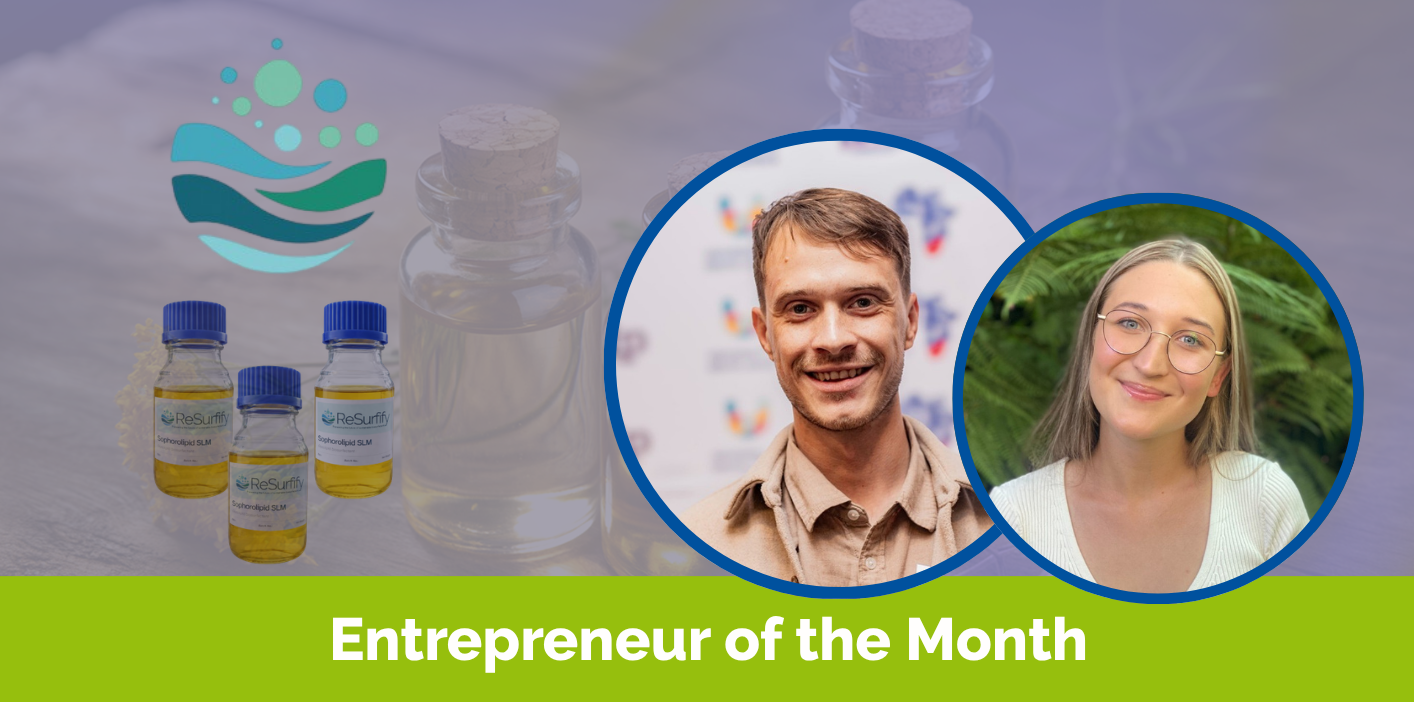
Dr André Valkenburg was finishing his chemical engineering degree when he hit crossroads. Most of his peers were heading into petroleum or mining, the traditional paths for South African chemical engineers. But that environment was not what he had wanted.
“At the end of my chemical engineering degree, I was conflicted,” André recalls. “I didn’t want to end up in the petroleum or mining industry like most chemical engineers in South Africa.”
Then he found the bioprocess engineering research group under Prof Robert Pott at Stellenbosch University. Everything changed. “It completely changed my perspective on what chemical engineering could be. The sustainable side of the field opened in a way that was exciting to me, and I knew that was the direction I wanted to go.”
André committed to a PhD in that group from 2022 to 2025, developing the technology that would result in the creation of ReSurfify. His research focused on glycolipid biosurfactants, biodegradable compounds that could replace the toxic petroleum-based surfactants found in everyday cleaning products, skincare, and industrial applications.
Towards the end of his PhD, something unexpected happened. Industry started paying attention. “I started noticing genuine interest from industry in biosurfactants, not just academic curiosity, but real demand,” he says. “That’s when it clicked that we might have something commercially viable here, and we’ve really just been pulled along by the market ever since.”
Collaborating for impact
For a while, André tried to do everything alone. By late 2025, he realised that was the biggest thing holding ReSurfify back. That realisation coincided perfectly with Jody Harvey starting her postgraduate work in the same research group.
Jody brought her own expertise in biosurfactant research, and the fit was instant and natural. Before long, she was deeply involved in the venture and joined as technical lead. Together, they transformed a PhD project into a fully-fledged biotech spin-out, building the company in partnership with SU LaunchLab and the Innovus Technology Transfer Office.
Meeting the market where it lives
ReSurfify’s core technology is novel. The team developed innovative biosurfactant molecules during their research, and those remain central to their long-term vision. But they made a strategic decision that sets them apart from many university spin-outs.
“We started out focused on some very novel biosurfactant molecules that came directly out of our research, and those are still very much part of our long-term vision,” André explains. “But we made a deliberate strategic call to first commercialise a biosurfactant that already has a proven global track record.”
The reason came down to honest market assessment that the South African market is not particularly research and development heavy. Andre explains, “We felt that trying to introduce a completely novel molecule right out of the gate would be an uphill battle, while trying to break into the European market without a track record would prove equally challenging.”
Therefore, they chose a pragmatic path. “The approach is to get our foot in the door, start producing, building credibility and a revenue base, and then move into our more novel compounds. It’s a pragmatic path, but we think it’s the right one,” he says.
From laboratory to winning prizes
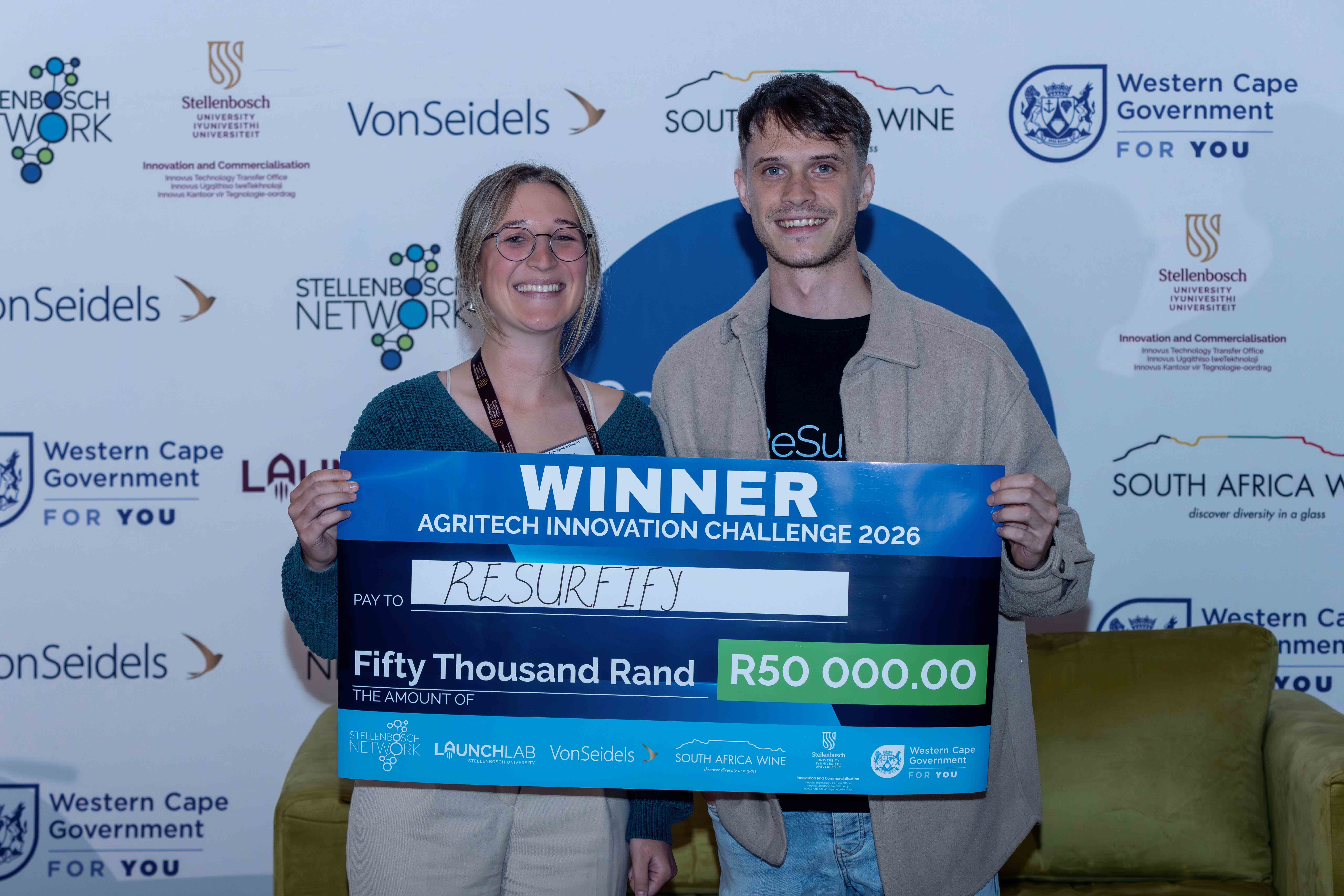
The strategy is working. ReSurfify has been gaining serious traction across South Africa’s startup ecosystem. They recently won the AgriTech Connect Innovation Challenge, taking home R50,000 for the best AgriTech innovation at the conference. The win was huge validation for their direction.
The team also made it to the Top 10 of the SWEAT Africa biotech and hardtech pitch competition, competing against some of the best startups from across the continent. More than 100 innovators and 50 investors gathered at that event, and ReSurfify stood among the finalists. Dr Valkenburg also placed sixth in the EDHE Absa Top Student Innovator of the Year competition, earning R25,000 to help fund their pilot-scale demonstration.
Building Africa’s First Biosurfactant Facility
The numbers behind their vision are striking. André anticipates that ReSurfify’s first facility will upcycle more than 375 tonnes of waste vegetable oil annually, cut 450 tonnes of CO₂ emissions each year, and remove 300 tonnes of toxic chemicals from the environment. The innovation also has the potential to create 30 jobs across the entire value chain.
Right now, the team is pushing hard toward their pilot-scale demonstration before the end of the year. Once they hit that milestone, they will be positioned to raise the capital needed to build what they believe will be Africa’s first dedicated biosurfactant production facility. It is an ambitious goal, but one that aligns with their broader mission to catalyse South Africa’s transition to locally produced, environmentally friendly chemicals and reduce reliance on imports.
Advice for future entrepreneurs
When asked what advice he would give aspiring entrepreneurs, André offered a powerful image.
“In the beginning, it feels like you’re the only one trying to push a massive boulder,” he says. “But the longer you persist, you start convincing one or two people to come along and help you push. Before you know it, the boulder’s rolling on its own.”
He leaves aspiring founders with this truth. “The hardest part isn’t sustaining momentum but creating it in the first place.”
For ReSurfify, that momentum is now and it shows no sign of slowing down.
For more information about ReSurfify, visit their website and follow them on LinkedIn.


