
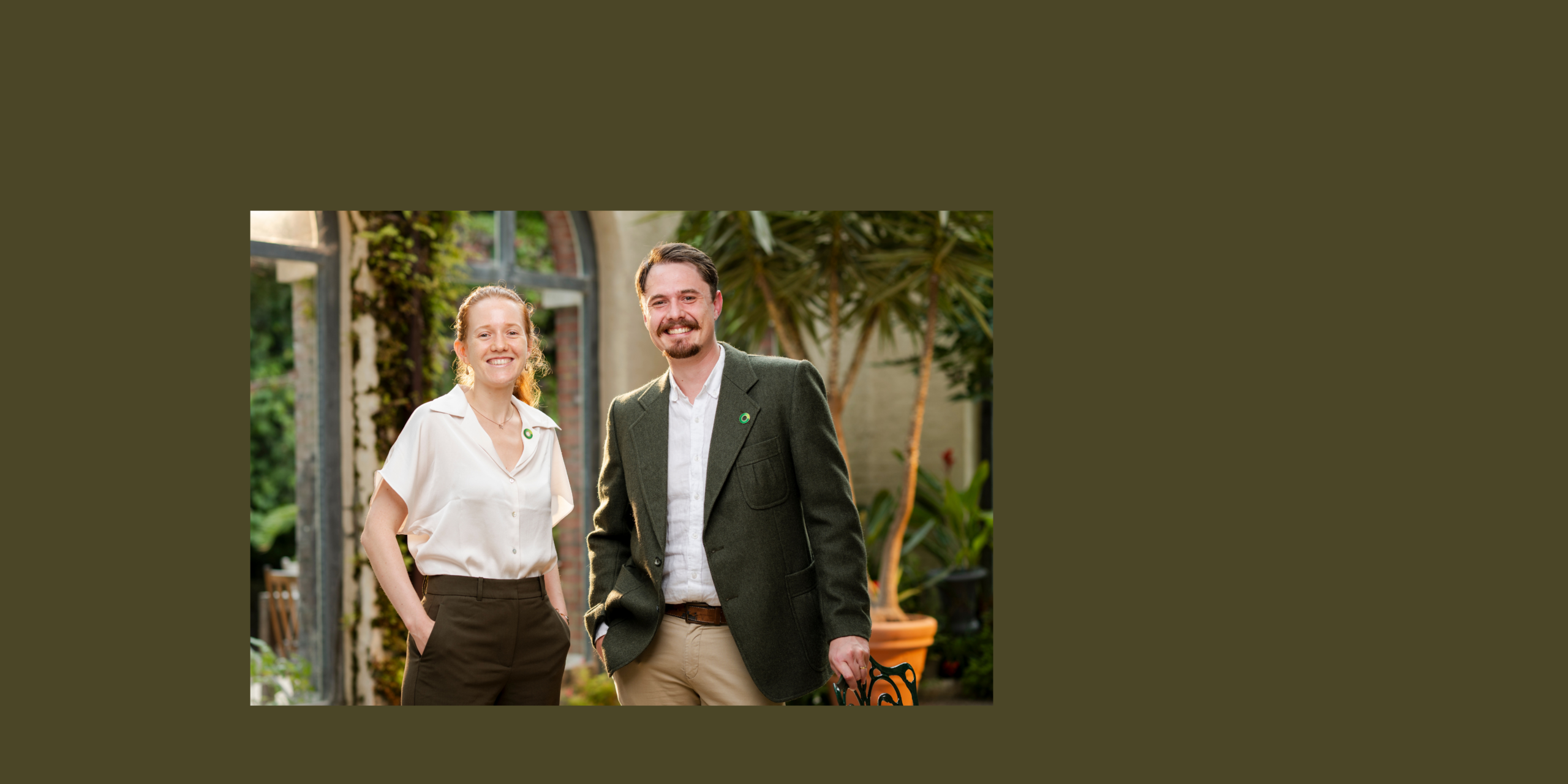
Dominique Rocher, co-founder of Urobo Biotech’s story is built from recognising and identifying solutions from nature for solving big problems. After working at SoftBank’s Global Business Development division, Dominique saw many powerful innovations remain trapped in academia. This led her to team up with Dr Wessel Myburgh whose PhD focused on developing core enzymatic plastic-degrading technology. Faced with the choice between corporate security and entrepreneurship, together, they co-founded Urobo Biotech, turning breakthrough science into real-world impact.
She studied at Stellenbosch University (SU) and spent time in Japan for further education. Now, she is pursuing a PhD at SU and the University of Padova in Italy.
The beginning of Urobo Biotech
Urobo started as a research project in SU labs. Over time, it grew into a university spin-out company with patents filed in four continents. The team completed a beta pilot in Europe, ran techno-economic assessments, and formed partnerships with industry players. They shifted from pure research and development to a business focused on commercial sales in Europe and Africa. Today, their technology uses enzymes to convert bioplastic waste into useful chemicals. This process lowers costs for waste operators and reduces environmental harm by keeping plastics out of landfills and oceans.
“Building the company came with real challenges. One big challenge was making deep science work into a commercially viable business model and getting funding. Waste markets move slowly and need proof before they trust new tech. To handle this, we published peer-review papers in academic and industry journals. We tested the technology on actual waste in pilots with facilities, leading to securing over one million dollars in grant funding through our work with SU and the University of Padova,” Dominique said.
Shining a spotlight at SWEAT Africa biotech and hardtech pitch competition
A key moment came in February 2026 at the SWEAT Africa pitch competition in Stellenbosch. Held at the Bertha Retreat, the two-day event drew over 100 innovators and 50 investors. Urobo Biotech won the top prize of R100,000 in the Biotech and Hardtech pitch competition.
Dominique said the win gives them visibility and resources at just the right time. “The prize funding allows us to convert current pilots into commercial sales by expanding local technical capacity and strengthening South Africa’s growing biotech ecosystem. This accelerates our ability to deploy our technology that uses enzymes to convert bioplastic waste into circular chemicals, reducing costs and environmental impact for waste operators,” she said.
She emphasised that SU, LaunchLab and the Innovus Technology Transfer Office (TTO) have been instrumental in providing mentorship, lab access, and business guidance.
“Their ecosystem enabled us to refine our business strategy, validate our technology, and connect with investors, giving us the confidence and preparation needed to compete, and win, at a platform like SWEAT Africa. It is also due to their efforts in creating and hosting the biotech and hardtech (advanced manufacturing devices) SWEAT Africa Pitching contest that we could compete on a stage in front of investors and other key ecosystem players,” she said.
Urobo stepping on global stages
Urobo Biotech also became the first South African team to reach the finals of the Hult Prize Foundation’s Global Startup Competition in 2025, an achievement that has cemented its reputation as one of Africa’s most promising young companies.
The competition opened opportunities for Urobo to engage or network with the most daring global entrepreneurs who are tackling the world’s biggest challenges. She said, “Reaching the global finals validated that a South African biotech startup could compete on the world stage, and the exposure unlocked real traction. More than that, it gave us a global network and a responsibility to pay it forward”.
The experience had a great impact for Dominique, from a competitor into a collaborator as she now serves as one of 10 global scouts helping to identify the next $1M winner, while mentoring over 30 African startups this year.
The competition is back this year and it will be hosting its National Competition in March 2026. This gives momentum to other spin-outs/startups whose solutions can have great impact nationally and internationally.
What lies ahead for Urobo Biotech?
Looking ahead, Urobo has letters of intent for product sales and adoption. They signed a conditional term sheet for 23 million dollars, which will unlock after a successful demo-scale test planned for early 2027. Commercial sales of enzyme product will start soon, bringing Urobo into the market ahead of full-scale deployment.
What stands out in Urobo’s approach is trust within the team. They support and challenge each other around a clear goal; to support and challenge one another, united by a shared vision of a world where waste is only waste if you waste it. And most importantly, building a future with customers from day one. “Do not innovate in isolation, co-create, test early and solve real problems,” was the advice she gave to future and current entrepreneurs.


